Dad’s Barbeque Best in Town
First Impressions: A Warm, Confident Grin — Not Just Another Grill Graphic
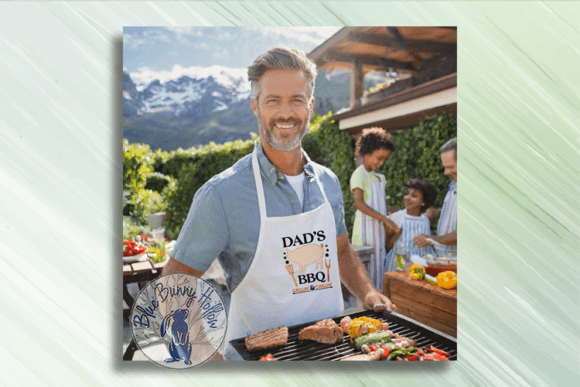
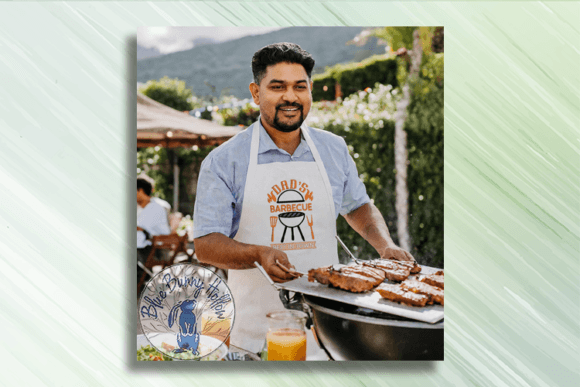
When I opened Dad’s Barbeque Best in Town for the first time, I didn’t see a generic “Dad + grill” cliché—I saw personality. The barbecue unit sits solidly centered, flanked by tongs and a spatula angled with purpose, not just decoration. Those flames? They’re stylized but lively—curving upward with enough motion to read as heat, not chaos. It’s got rhythm: balanced weight, clear negative space around key elements, and a friendly, confident tone that lands somewhere between backyard pride and gentle humor. This isn’t a design shouting for attention—it’s leaning against the grill, smiling while flipping burgers. That matters. Because when you’re stitching it onto a real product—a custom embroidered tote bag for a local farmers’ market vendor, say—it needs to feel intentional, not slapped on.
Where It Shines: Real Projects, Real Customers
I tested Dad’s Barbeque Best in Town across three actual production scenarios: a heavyweight cotton apron for a food truck owner, a soft organic-cotton baby onesie (for Father’s Day pre-orders), and a set of linen tea towels for a boutique kitchen line. In every case, the design held up—not because it’s technically flawless, but because its visual hierarchy works. The barbecue body reads clearly at 3.5 inches wide, the utensils retain legibility without oversimplifying, and the flames add energy without overwhelming. On the apron, it stitched cleanly over quilting lines thanks to moderate stitch density and well-placed satin-stitch outlines. On the onesie, I used lightweight tear-away stabilizer and reduced top tension slightly—still got crisp edges and no puckering. And on the tea towels? The fill stitches settled beautifully into the fabric texture, giving that handmade warmth customers pay extra for.
Where to Pause—and Why
This design isn’t magic. It asks for thoughtful execution. On stretchy fabrics like jersey t-shirts or curved surfaces like caps, the flame details and thin utensil handles need extra stabilization—especially where curves meet sharp angles. I’d avoid using Dad’s Barbeque Best in Town under 2.75 inches tall without verifying how the lettering and flame tips hold up; small hoop sizes can compress detail and increase thread breaks. On dark fabric, contrast is your friend—test those flame highlights in light thread (ecru or pale yellow) before committing. And if you’re planning frequent washing (think kids’ clothes or kitchen linens), double-check that the fill stitch density doesn’t create stiff, inflexible zones—those can crack or pull over time. It’s not a dealbreaker, just a heads-up: this design rewards attention, not autopilot.
What It Does for Your Brand—and Your Buyers
As a designer who sells digital embroidery files and consults with Etsy sellers, I notice how much Dad’s Barbeque Best in Town lifts perceived value. It reads as *designed*, not assembled. That means customers trust the finished product more—they’ll describe it as “thoughtful,” “well-made,” or “so him.” For small shop owners, that translates directly to fewer returns and more repeat buyers. For craft fair vendors, it’s a conversation starter (“Oh, my dad *actually* says that!”). Even in printable mockups for your Etsy listing, this design photographs well—no muddy corners, no lost detail in shadows. It supports brand consistency, too: pair it with clean sans-serif fonts for tags or packaging, and you’ve got a cohesive, professional look that feels personal, not mass-produced.
Practical Designer Notes Before You Stitch
- Always test on scrap fabric first—especially if you’re layering stabilizer for textured or thin materials.
- Check thread color contrast early: fiery reds pop on light backgrounds, but consider burnt orange or charcoal gray for dark fabric readability.
- Review stitch density in your embroidery software—if fill areas look overly dense, reduce density by 5–10% for better drape on apparel.
- Confirm hoop size compatibility before quoting a client project—some versions may require a 4x4 hoop minimum.
- Inspect small details like flame tips and utensil ends at 200% zoom; they should be clean, not jagged or overly thin.
- Test in black-and-white mockups to assess silhouette strength—this design holds up well, but verify for your specific use case.
- Use proper stabilizer: medium cutaway for knits, lightweight tear-away for stable wovens, and fusible for patches.
- Confirm licensing terms before selling finished items or digital embroidery files—commercial use rights aren’t automatic.
Final Thought: A Design That Fits the Occasion—Not Just the Hoop
Dad’s Barbeque Best in Town doesn’t try to be everything. It’s not a tiny monogram, a sprawling scene, or an abstract pattern. It’s a focused, warm, confidently executed machine embroidery design built for moments—Father’s Day gifts, food-themed merchandise, personalized baby gear, or small-batch boutique goods. It performs best when treated like a collaborator: respected for its strengths, supported where needed, and placed thoughtfully on the right fabric, for the right person, in the right context. If you’re curating embroidery project assets for your craft business—or choosing a design that reflects real care in your next handmade product—this one earns its spot. Not because it’s flashy, but because it’s honest, usable, and quietly memorable.