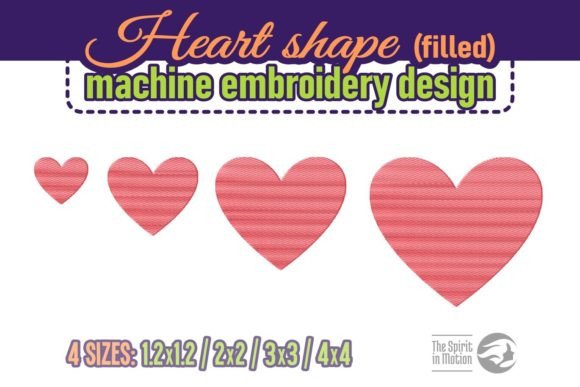
Cute Filled Heart Shape
A Practical Review for Small Business Embroidery Use
As an embroidery designer who’s digitized and stitched over 2,000 commercial projects—from café aprons to boutique tote bags—I approached the Cute Filled Heart Shape with a specific question: does this machine embroidery design translate into reliable, brand-forward small business merch? Not just as a decorative element, but as a functional part of a visual identity system—on patches, staff uniforms, product tags, and customer-facing items. The answer is yes—but with smart, intentional application.
First Impression: Friendly, Clean, and Professionally Approachable
The title Cute Filled Heart Shape sets clear expectations: it’s not ornate, not vintage-scripted, not minimalist-line-art—it’s a solid, filled heart, designed for clarity and charm. That “filled” detail matters. It signals confidence in stitch coverage and density, which directly impacts durability on high-use items like aprons or staff caps. Visually, it reads as warm and inclusive—ideal for businesses rooted in care: florists, pet brands, bakeries, handmade studios, and local boutiques. It avoids looking juvenile or overly saccharine, thanks to its clean shape and balanced proportions—making it equally at home on a Mother’s Day gift tag or a year-round café uniform.
Where It Shines in Real Business Applications
- Embroidered patches: The filled form holds up beautifully at 1.5–2.5 inches. No thin outlines to fray, no interior gaps to trap lint—just consistent coverage that looks polished on woven backing or twill tape.
- Staff uniforms & aprons: As a chest accent or sleeve detail, Cute Filled Heart Shape adds subtle brand warmth without overwhelming workwear. It reads clearly from 6+ feet away—critical for hospitality or retail environments.
- Cap embroidery: On structured front panels (especially mid-crown), it maintains legibility and balance. Its compact silhouette avoids stretching distortion common with elongated motifs.
- Tote bag design & product packaging accents: When stitched onto natural canvas or cotton duck, the filled shape anchors branding with tactile presence—more memorable than a printed logo alone.
- Etsy branding & handmade product labels: Paired with a simple font or monogram, it becomes a signature touch on hangtags, linen pouches, or ceramic jar labels—reinforcing authenticity and care.
Use With Intention: Key Considerations for Commercial Projects
While versatile, Cute Filled Heart Shape isn’t universally plug-and-play. Here’s where thoughtful execution matters:
- Small patch sizes (<1.25”): Test stitch-out first. Very tight fills can compress thread tension or create visible puckering on lightweight stabilizer. A slight reduction in density may improve results.
- Curved surfaces (e.g., cap fronts, rounded tote handles): Ensure your digitizer accounted for fabric stretch. If the file wasn’t optimized for curve compensation, consider light manual adjustment before bulk production.
- Dark uniforms or textured fabric: Contrast is non-negotiable. Run test stitches in both black and white thread on your target fabric. Avoid pastels unless you’ve confirmed visibility under ambient lighting.
- Frequent washing (aprons, staff shirts): High stitch density supports longevity—but only if paired with quality polyester thread and appropriate tear-away or cut-away stabilizer. Never skip the stabilizer step, even on stable fabrics.
How It Strengthens Brand Identity—and Why That Matters
In small business merch, every stitched element contributes to perception. Cute Filled Heart Shape doesn’t scream “look at me”—it whispers “we care.” That quiet confidence builds trust: customers associate it with attention to detail, consistency, and human-centered values. Used across multiple touchpoints—a heart on a barista’s apron, a matching patch on a customer’s tote, and a subtle version on product packaging—it creates visual rhythm without repetition fatigue. Unlike complex logos, it scales gracefully across formats, supporting cohesive design assets without demanding custom adaptations for each use case.
Essential Designer Notes Before You Stitch
- Always run a test stitch in black and white thread—not just color—to evaluate contrast and clarity on your actual fabric.
- Check how Cute Filled Heart Shape performs at your smallest intended size (e.g., 1.25” patch). If edges blur or fill appears uneven, adjust density or request a simplified version from your digitizer.
- Review thread color contrast against your base fabric—not just on screen. What looks vibrant digitally may disappear on oatmeal linen or navy twill.
- Inspect spacing between elements if combining with text or other motifs. Tight crowding undermines professionalism, especially on chest logos.
- Confirm hoop size compatibility. Some filled hearts require larger hoops for smooth hooping—don’t assume it fits your standard 4x4 unless verified.
- Test on real fabric with your intended stabilizer. Fabric texture changes everything: terry cloth absorbs density differently than smooth poplin.
- Create a printable mockup for client approval—especially for Mother’s Day collections or seasonal launches. Visual buy-in prevents costly rework.
- Compare Cute Filled Heart Shape beside your existing design assets. Does it share weight, proportion, and tone? Consistency strengthens recognition.
- Verify commercial licensing before using in client projects or resale merchandise. This is a digital embroidery file—intended for commercial embroidery, but license terms must be confirmed by the seller.
Final Thought: Charm With Purpose
Cute Filled Heart Shape succeeds because it balances emotional resonance with technical reliability. It’s not just a heart—it’s a tool for small businesses to signal warmth without sacrificing polish. Whether anchoring a bakery’s custom apparel line or elevating handmade product packaging, it delivers recognizable, repeatable, and wash-tested value. For embroidery shops and merch creators, that means fewer revisions, faster approvals, and happier clients. And in the world of small business branding? That’s not just cute—it’s strategic.