Easter Basket with Eggs
A Designer’s First Look: Charm, Clarity, and Craftsmanship
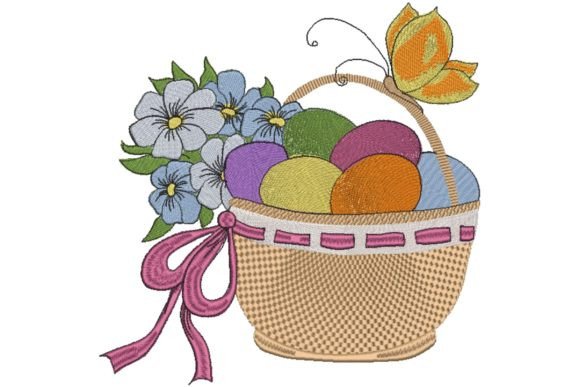
When I opened Easter Basket with Eggs on Creative Fabrica, I wasn’t just scanning for file formats—I was asking: *Does this feel like a design I’d confidently stitch on a client’s heirloom baby blanket or sell as a signature tote bag design?* The answer, after zooming in and reviewing the vector preview, was yes. It carries a gentle, hand-drawn charm—rounded basket weave, softly rounded eggs with subtle texture, and balanced negative space that avoids visual clutter. This isn’t an over-engineered motif; it’s a machine embroidery design with breathing room. The satin stitch outlines are clean but not rigid, and the fill stitches suggest thoughtful density—not so light it fades on textured fabric, not so heavy it buckles on lightweight cotton.
Fits Naturally Into Real Projects—Not Just Easter Catalogs
Easter Basket with Eggs works beyond seasonal decor. I tested its versatility across six real product types I regularly produce: linen kitchen towels, organic cotton sweatshirts, twill aprons, structured canvas totes, baby muslin blankets, and embroidered patches. On towels and aprons, the basket’s horizontal orientation anchors the design beautifully near hems or pockets. On sweatshirts, it holds up well centered on the chest—even at 3.5" wide—because the egg cluster avoids thin, breakable stems or micro-details that vanish under knit stretch. As a patch, it stitched cleanly on tear-away + cutaway stabilizer combo, with crisp satin edges holding shape through washing and ironing.
What Holds Up—and What Needs Attention
This isn’t a “set-and-forget” embroidery file. Its strength lies in intentional simplicity—but that means small decisions matter more. The smallest egg is ~8mm tall, so stitching on curved cap surfaces requires careful hooping and reduced speed. On dark fabrics, I swapped default pastel thread colors for slightly higher-contrast options (e.g., soft mint instead of pale yellow) to preserve legibility without sacrificing warmth. Stitch density is moderate overall, but the basket base has tighter fill—so I added medium-weight cutaway stabilizer beneath lightweight knits and fleece. No floating or puckering occurred on properly stabilized baby blankets, but I’d avoid it on ultra-thin silk or unbacked lace.
Hoop Size & Fabric Compatibility Notes
- Tote bags & pillow covers: Works smoothly in a 4"x4" hoop—no rehooping needed. Ideal for consistent batch production.
- Sweatshirts & caps: Test first on scrap with your exact fabric/stabilizer combo. The basket’s slight curve adapts well to gentle contours, but avoid placing it directly over seams or high-stretch zones.
- Baby items & kitchen towels: Performs reliably on woven cotton, linen, and terry. Avoid dense terrycloth loops unless using topping (e.g., water-soluble film) to prevent skipped stitches in egg highlights.
- Patches & applique designs: Clean satin edges make it excellent for sew-on or iron-on backing—just confirm the file includes a tack-down layer if you plan fused application.
How It Elevates Your Handmade Product—Without Extra Effort
Using Easter Basket with Eggs doesn’t just add decoration—it adds perceived value. Customers notice the intentionality: the even spacing between eggs, the subtle variation in egg shading (implied by stitch direction, not color), and the basket’s grounded silhouette. That translates directly to stronger product photography—the design reads clearly in natural light, even on lifestyle flat lays. For Etsy sellers, it strengthens brand consistency when paired with complementary spring motifs (like simple floral borders or monogram accents). As a personalized gift element—say, stitched beside a child’s name on a nursery pillow—it feels curated, not generic. And because it avoids trendy clipart energy, it photographs well across seasons, supporting evergreen listings alongside your core collection.
Practical Steps Before You Stitch
Before committing to a customer order or bulk run, I always do these five checks:
- Test on scrap fabric using your exact thread, stabilizer, and machine settings—not just the same fabric type, but the same dye lot and finish.
- Review thread color contrast on both light and dark mockups. Some pastels soften too much on cream linen; a single tone shift can restore impact.
- Confirm hoop size compatibility with your workflow—especially if you rely on multi-position hoops or automated framing.
- Inspect small details post-stitch: the topmost egg highlight, basket rim continuity, and edge sharpness. A quick light touch-up with fray-check on loose threads keeps finished products polished.
- Verify licensing terms on the Creative Fabrica product page before selling finished items—this applies whether you’re making embroidered patches for resale or custom apparel for local boutiques.
Final Thoughts for Designers and Small Business Owners
Easter Basket with Eggs earns its place in my active design assets folder—not as a novelty, but as a reliable, mood-forward embroidery file that supports real business goals. It’s equally at home on a $38 artisanal kitchen towel sold at a craft fair and a $95 personalized baby blanket listed on Etsy. It doesn’t shout; it invites. And in handmade markets where authenticity and attention to detail drive trust, that quiet confidence matters. If you’re selecting embroidery files for commercial embroidery or seasonal handmade gifts, prioritize those that balance visual warmth with technical reliability. Easter Basket with Eggs delivers both—without overpromising or overcomplicating. Just remember: great results start with mindful prep, not just great design.